



- TCWRC Water Damage Port St Lucie
- Port St Lucie, FL 34952
Mold After Water Damage in Port St Lucie Homes (34952)
In Port St Lucie, mold does not wait for a dramatic flood. A slow AC condensate leak, a roof drip after tropical rain, or damp carpet from a broken supply line can feed colonies within a few days. Humidity across the Treasure Coast keeps materials moist longer than many inland cities, which is why water events in ZIP 34952 turn into mold calls so often.
TCWRC Water Damage Port St Lucie handles both the water and the mold that follows. This guide explains the timeline, the early warning signs in local homes, and the actions that interrupt growth before it spreads behind cabinets and baseboards.
If Port St Lucie air is already sticky and your drywall stayed wet through a weekend, assume mold risk is real even if you only see a faint stain. — TCWRC Water Damage Port St Lucie
How Fast Mold Can Start After Water Intrusion
Mold spores are already in Florida air. They need moisture and a food source such as drywall paper, wood, dust, or fabric. When indoor relative humidity stays high and materials stay wet past about 24 to 48 hours, colonies can begin. Visible growth may show a little later, but the process starts earlier than most homeowners expect.
That is why professional drying after a leak is not optional decoration. Fans aimed at a wet carpet for an afternoon rarely dry the pad and subfloor. Moisture meters and controlled dehumidification are part of proper water damage restoration, and they are the first line of mold defense in Port St Lucie.
Why Florida humidity changes the clock
Homes in Port St Lucie, FL 34952 often run air conditioning hard in September, but that does not automatically dry wet wall cavities. Condensate lines can also create their own leaks. After storms, outdoor air is humid, so cracking windows is not a drying strategy. Controlled indoor drying with the right equipment matters more than hope and a box fan.
Common Water Sources That Lead to Mold Locally
- Roof leaks after wind-driven rain during hurricane season bands.
- Supply line failures under sinks, behind toilets, and at washer hookups.
- Storm or street water that entered through doors, vents, or low windows.
- Hidden condensate or plumbing leaks that keep one wall damp for weeks.
Floodwater brings extra concerns because it may carry contaminants. In those jobs, cleaning and selective demolition often come before rebuild. See our flood restoration page for how contaminated water events are handled differently from clean supply leaks. If you are still deciding what to do on day one, use the first 24 hours after a flood checklist.
Warning Signs You Should Not Ignore
Smell, stains, and soft materials
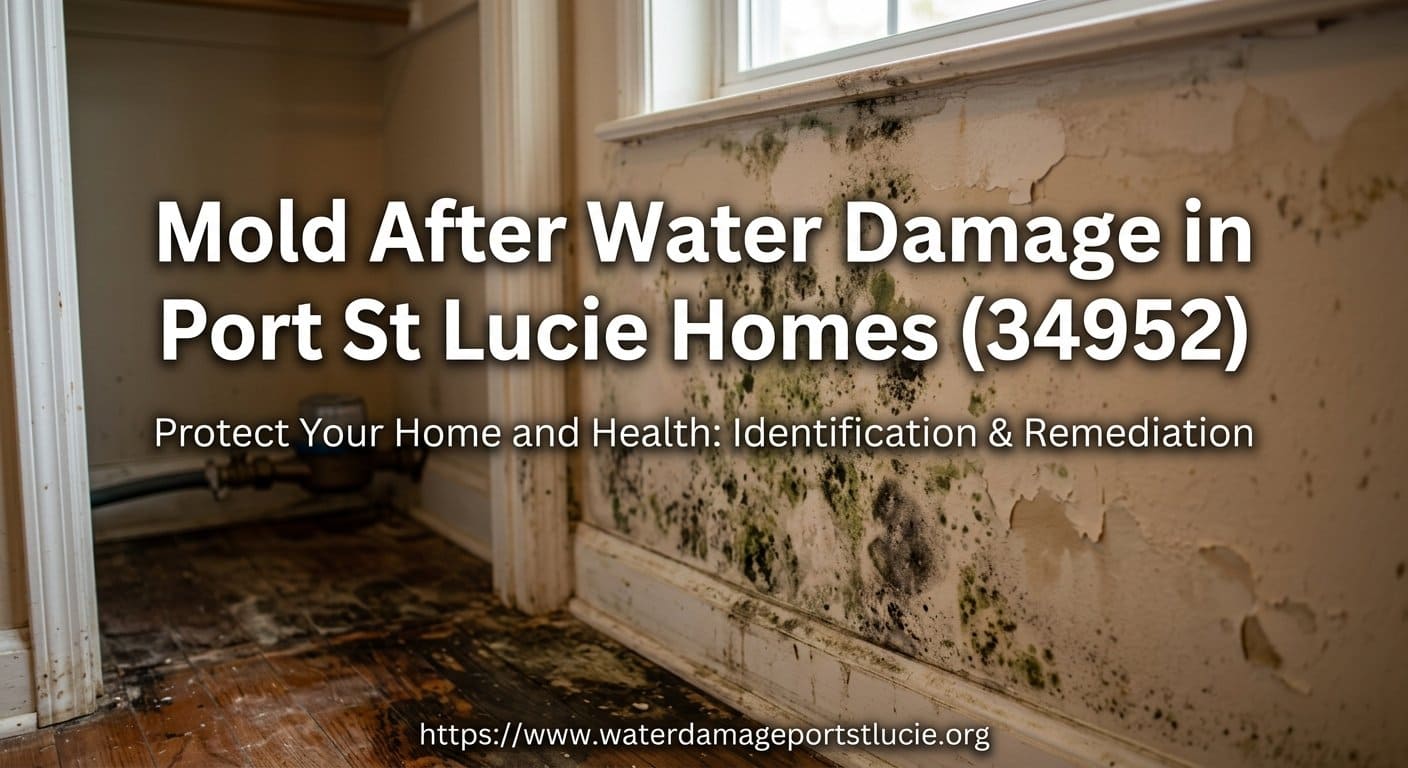
A persistent earthy or musty odor after a drying attempt is a red flag. Look for discoloration on baseboards, bubbling paint, warped closet flooring, and spotting on drywall. Soft drywall that crumbles when pressed usually means the paper facing stayed wet too long in Florida humidity.
Health clues in humid rooms
Some residents notice more coughing, itchy eyes, or congestion in a specific bedroom or bathroom after a water event. Mold is not the only cause, but combined with known moisture it deserves a professional look. Do not grind spores into the air with aggressive DIY scrubbing on large growths.
Closets against exterior walls, laundry rooms, and guest bathrooms are frequent find spots in Port St Lucie homes. Check behind stored boxes and under vanity cabinets where air rarely moves.
Seeing musty odors or staining after a leak in Port St Lucie, FL 34952?
Call (772) 237-3272 any time. Our team serves homes and businesses across Port St Lucie, FL 34952.
Call (772) 237-3272How to Slow Mold Growth Right Away
Stop the water source. Remove standing water safely. Increase air movement only after you understand where moisture is hiding. Pull wet rugs and soft goods outdoors if they can be cleaned later. Keep HVAC filters clean so you are not circulating dust from damp zones through the house.
For anything beyond a tiny surface spot on non-porous material, call pros trained in containment and removal. Our mold remediation process focuses on isolating the work area, removing damaged materials when needed, cleaning remaining surfaces, and verifying moisture is under control before rebuild.
What professional drying adds
Technicians map moisture with meters, set dehumidifiers to pull grains of water from the air, and place air movers to create evaporation at wet surfaces without driving moisture into clean rooms. That system approach is different from running a shop fan overnight and hoping for the best. It is also the bridge between emergency water damage response and long-term mold control.
When to Call for Help in 34952
If water is still actively entering, if sewage or outdoor floodwater is involved, or if you see growth spreading across a wall cavity, treat it as urgent. Call (772) 237-3272 for 24/7 response in Port St Lucie, FL 34952. Our team can stabilize the property first, then address mold risk with a clear plan.
Prevention during storm season still matters. Pair this article with our hurricane season water damage prevention guide, and keep the flood-day checklist handy for the next heavy rain event. Browse all posts on our water damage blog, or go straight to contact us if you prefer to schedule a conversation by phone.
Need help now? Call (772) 237-3272 anytime for mold and water damage response in Port St Lucie, FL 34952.
Frequently Asked Questions
How quickly can mold grow after water damage in Port St Lucie?
In Florida humidity, mold can begin within about 24 to 48 hours on wet porous materials. Visible growth may appear later, so fast drying is critical in Port St Lucie, FL 34952.
Can I clean mold myself after a leak?
Tiny spots on hard surfaces may be manageable, but larger growth, wall cavities, or contaminated floodwater need professional mold remediation with proper containment.
Who should I call for mold after water damage in 34952?
Call TCWRC Water Damage Port St Lucie at (772) 237-3272. We handle emergency water removal and mold remediation throughout Port St Lucie, FL 34952.
Does drying alone stop mold?
Proper structural drying greatly reduces mold risk. If growth is already present, remediation may also require containment, material removal, and cleaning before rebuild.
Related Guides for Port St Lucie, FL 34952
Keep reading with these Port St Lucie water damage guides from TCWRC Water Damage Port St Lucie:
- Hurricane Season Water Damage Prevention in Port St Lucie, FL 34952 (September 18, 2026)
- First 24 Hours After a Flood in Port St Lucie, FL 34952 (September 5, 2026)
- Back to the water damage blog